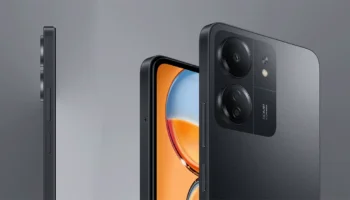
With Xiaomi’s consistent push to innovate its mid-range lineup, the Redmi Note 13 Pro and Redmi Note 13 Pro+ 5G are two stellar models vying for consumer attention. This review will break down the differences between these two smartphones in terms of performance, design, and value to help you decide which one suits your needs best.
Release Date & Updates
Both the Redmi Note 13 Pro and Redmi Note 13 Pro+ were announced in September 2023 and became available shortly after. They ship with Android 13, with support for up to three major Android upgrades, ensuring users remain up-to-date with the latest software features and security patches. However, the Pro+ version comes with HyperOS, Xiaomi’s upcoming operating system aimed at unifying its mobile and IoT ecosystems.
Screen Quality & Visuals
Both devices boast impressive 6.67-inch AMOLED displays with 120Hz refresh rates and Dolby Vision for vivid colors and smooth scrolling. However, the Redmi Note 13 Pro+ stands out with a peak brightness of 1800 nits, compared to the Pro’s 1331 nits. The higher brightness ensures better visibility in direct sunlight and improved HDR content quality.

While both phones feature Gorilla Glass Victus protection, the Pro+ also has an IP68 dust and water resistance rating, making it more durable under extreme conditions compared to the Pro’s IP54 rating.
Processing Power & Storage
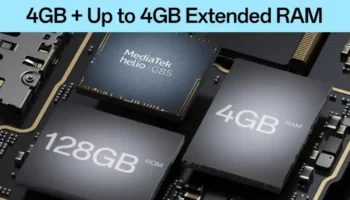
The core difference in performance comes from the processors. The Redmi Note 13 Pro+ is powered by the MediaTek Dimensity 7200 Ultra (4nm) chipset, offering slightly better gaming and multitasking performance. The Redmi Note 13 Pro, meanwhile, uses the Snapdragon 7s Gen 2 (4nm) chipset, which is still highly capable for everyday tasks but lags slightly in handling more demanding applications.

In terms of storage, both models come with 8GB and 12GB RAM options. However, the Redmi Note 13 Pro+ supports faster UFS 3.1 storage, which is more efficient at handling data-heavy tasks compared to the UFS 2.2 in the Pro.
Photography & Video Capabilities
Both phones feature a 200MP main camera with OIS (optical image stabilization) for clear and sharp photos. The Redmi Note 13 Pro+, however, enhances the camera experience with OIS + EIS dual stabilization, providing superior video stabilization during movement.

For low-light photography, the Pro+ version uses advanced ALD ultra-low reflective optical coating that reduces glare and ghosting, making it ideal for night photography. In terms of video, both devices can shoot in 4K@30fps but the Pro+ has better focus accuracy and faster response thanks to the Super QPD.
Sound & Connectivity Options
While both devices include stereo speakers with Hi-Res audio, the Redmi Note 13 Pro+ offers slightly better audio quality with Hi-Res wireless support. In terms of connectivity, both phones support Wi-Fi 6, Bluetooth 5.3, NFC, and feature dual SIM slots.
One drawback of both devices is the lack of a 3.5mm audio jack, making users rely on USB-C for audio output or wireless headphones.
Battery Life & Extra Features
The Redmi Note 13 Pro+ houses a 5000mAh battery with 120W fast charging, capable of reaching 100% charge in just 19 minutes. Meanwhile, the Redmi Note 13 Pro offers a slightly larger 5100mAh battery, but its 67W fast charging takes around 44 minutes to fully charge.

Both phones feature in-display fingerprint sensors and ship with MIUI 14 (customized Android 13). The Pro+ model, however, comes with a few extra features like better water and dust resistance (IP68) and HyperOS support.
Redmi Note 13 Pro and Redmi Note 13 Pro+ Comparison
| Specification | Redmi Note 13 Pro+ | Redmi Note 13 Pro |
|---|---|---|
| Network Technology | GSM / CDMA / HSPA / EVDO / LTE / 5G | GSM / CDMA / HSPA / CDMA2000 / LTE / 5G |
| Launch | Announced: 2023, September 21 Released: 2023, September 21 | Announced: 2023, September 21 Released: 2023, September 21 |
| Body Dimensions | 161.4 x 74.2 x 8.9 mm (6.35 x 2.92 x 0.35 in) | 161.2 x 74.2 x 8 mm (6.35 x 2.92 x 0.31 in) |
| Weight | 199 g or 204.5 g (7.02 oz) | 187 g (6.60 oz) |
| Build | Glass front (Gorilla Glass Victus), glass back or silicone polymer back (eco leather) | Glass front (Gorilla Glass Victus), plastic frame, glass back |
| SIM | Nano-SIM, eSIM or Dual SIM (Nano-SIM, dual stand-by), IP68 dust/water resistant (up to 1.5m for 30 min) | Nano-SIM, eSIM or Dual SIM (Nano-SIM, dual stand-by), IP54 dust and splash resistant |
| Display Type | AMOLED, 68B colors, 120Hz, Dolby Vision, HDR10+, 1800 nits (peak) | AMOLED, 68B colors, 120Hz, Dolby Vision, 500 nits (typ), 1200 nits (HBM), 1800 nits (peak) |
| Display Size | 6.67 inches, 107.4 cm² (~89.7% screen-to-body ratio) | 6.67 inches, 107.4 cm² (~89.8% screen-to-body ratio) |
| Resolution | 1220 x 2712 pixels, 20:9 ratio (~446 ppi density) | 1220 x 2712 pixels, 20:9 ratio (~446 ppi density) |
| Protection | Corning Gorilla Glass Victus | Corning Gorilla Glass Victus |
| OS | Android 13, up to 3 major Android upgrades, HyperOS | Android 13, up to 3 major Android upgrades, HyperOS |
| Chipset | Mediatek Dimensity 7200 Ultra (4 nm) | Qualcomm SM7435-AB Snapdragon 7s Gen 2 (4 nm) |
| CPU | Octa-core (2×2.8 GHz Cortex-A715 & 6×2.0 GHz Cortex-A510) | Octa-core (4×2.40 GHz Cortex-A78 & 4×1.95 GHz Cortex-A55) |
| GPU | Mali-G610 MC4 | Adreno 710 |
| Memory | 256GB 8GB RAM, 256GB 12GB RAM, 512GB 8GB RAM, 512GB 12GB RAM, 512GB 16GB RAM (UFS 3.1) | 128GB 8GB RAM, 256GB 8GB RAM, 256GB 12GB RAM, 512GB 12GB RAM, 512GB 16GB RAM (UFS 2.2) |
| Main Camera | Triple: 200 MP (wide) + 8 MP (ultrawide) + 2 MP (macro), OIS | Triple: 200 MP (wide) + 8 MP (ultrawide) + 2 MP (macro), OIS |
| Selfie Camera | 16 MP, f/2.4 (wide) | 16 MP, f/2.4 (wide), 1/3.06″, 1.0µm |
| Sound | Stereo speakers, no 3.5mm jack | Stereo speakers, 3.5mm jack |
| Battery | Li-Po 5000 mAh, 120W wired charging, 100% in 19 min | Li-Po 5100 mAh, 67W wired charging, 100% in 44 min |
| Colors | Midnight Black, Moonlight White, Aurora Purple, Camo Green | Midnight Black, Aurora Purple, Ocean Teal, Arctic White, Olive Green, Scarlet Red |
Cost & Availability
The price difference between the two models is noticeable. The Redmi Note 13 Pro is available at Php 14,000 to Php 19,000, making it an affordable option for users looking for a powerful mid-range device. On the other hand, the Redmi Note 13 Pro+ is priced at Php 21,000 and above, targeting those who want premium features like a faster chipset, better durability, and enhanced camera capabilities without breaking the bank.
The Redmi Note 13 Pro and Redmi Note 13 Pro Plus 5g are both solid choices in the mid-range smartphone market. If you need a phone with more robust performance, superior camera capabilities, and faster charging, the Redmi Note 13 Pro+ is worth the extra investment. However, if you’re looking for a budget-friendly option with strong all-around features, the Redmi Note 13 Pro provides excellent value.
Ultimately, your choice will depend on your specific needs and how much you are willing to invest in a smartphone.